Ordering hand-woven silk is nothing like ordering industrial fabric. It's a different pace, a different relationship. Here is what I consistently share with designers discovering this process for the first time.
Weaving time cannot be compressed
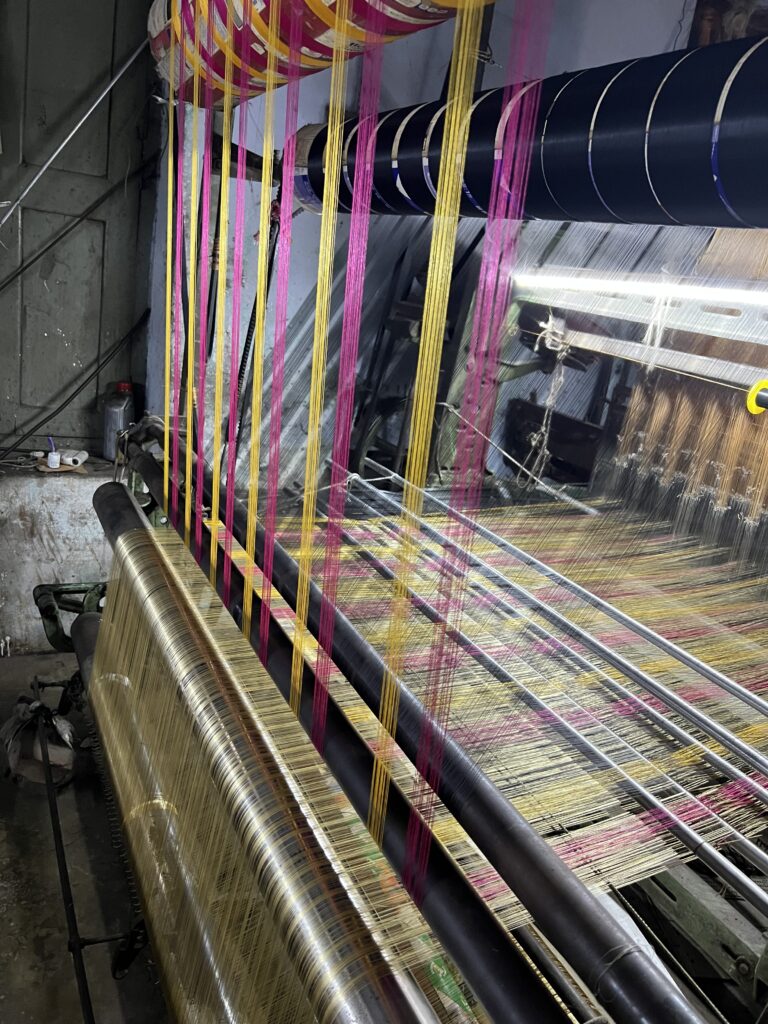
An Indian weaver sometimes takes several days to produce one length of fabric. This isn't an administrative delay — it's real production time. Planning your collection or project with this rhythm in mind means respecting the very nature of what you're ordering — slow fashion isn't a marketing line for me, it's an accepted constraint of the craft.
Quantities designed for exception, not volume
I don't sell off standardised rolls. Every order is a one-of-a-kind piece or a very small batch, cut for your specific project. This also means immediate stock for a large yardage isn't always available — availability depends on what I've brought back from India and the season.
Customisation, a real possibility
Colour, pattern, width: certain specific requests can be discussed directly with the Indian workshops I work with. It isn't automatic or instant, but it's a richness no industrial fabric offers.
No two pieces are strictly identical
A slight variation in shade or texture from one metre to the next isn't a flaw to flag — it's the signature of hand weaving. A designer working with this material needs to build that variability into their design, rather than fight it.
How an order works
Everything starts with a conversation about your project, followed if possible by a showroom appointment to choose the material in person. Once selected, the production or shipping timeline is communicated clearly, with no last-minute surprises.
Have a project and want to understand how it could work with Tohora? Book an appointment.